28
questions
Behavior assessment
PBTI turns everyday behavior into a clear personality profile through 28 questions, 12 shared pet types, a detailed report, and portrait-ready share cards.
No sign-in needed to start. Sign in only when you want to save the full report.
Your pet's result brings together a personality type, readable behavior traits, care suggestions, and a share-ready portrait card.
Steady, loyal, and happiest when their world feels familiar.

PBTI is a behavior-based personality indicator. Owner-observed daily behavior determines the score; breed, age, and photo information only help personalize the reading experience.
Uses owner-observed cat personality research as conceptual background. PBTI uses related behavior cues, but does not reproduce the Feline Five scale or claim equivalent validation.
Uses everyday behavior cues related to domains measured by instruments such as C-BARQ. PBTI is a separate educational model and does not use C-BARQ norms or diagnose behavior problems.
The 28 answers are scored on A/I, E/S, V/C, and P/G, then matched to twelve custom prototypes shared across cats and dogs.
Name, species, breed, age, and daily living context create the baseline for interpreting behavior without relying on breed stereotypes.
Upload up to 3 pet photos. The visual model reviews appearance cues such as coat, face shape, body structure, and possible breed mix to enrich the final report.
Owner-observed reactions, routines, social contact, novelty response, activity level, and vigilance are mapped into the four PBTI behavior axes.
The final result links one of 12 PBTI types with trait evidence, care suggestions, visual notes, and poster-ready material for sharing.
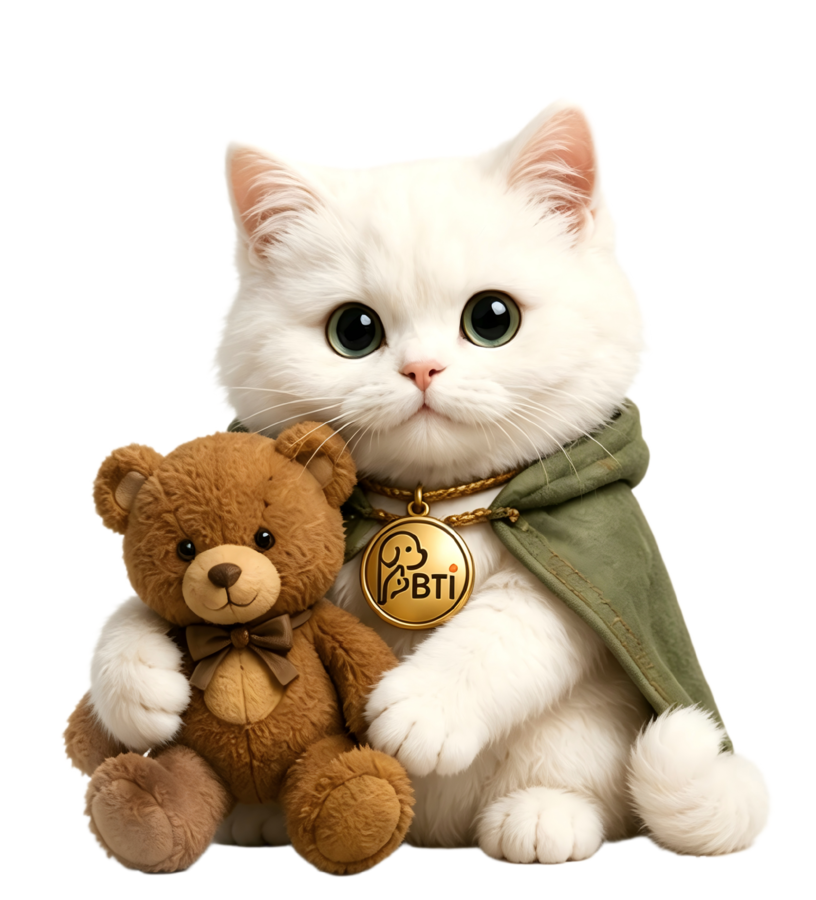
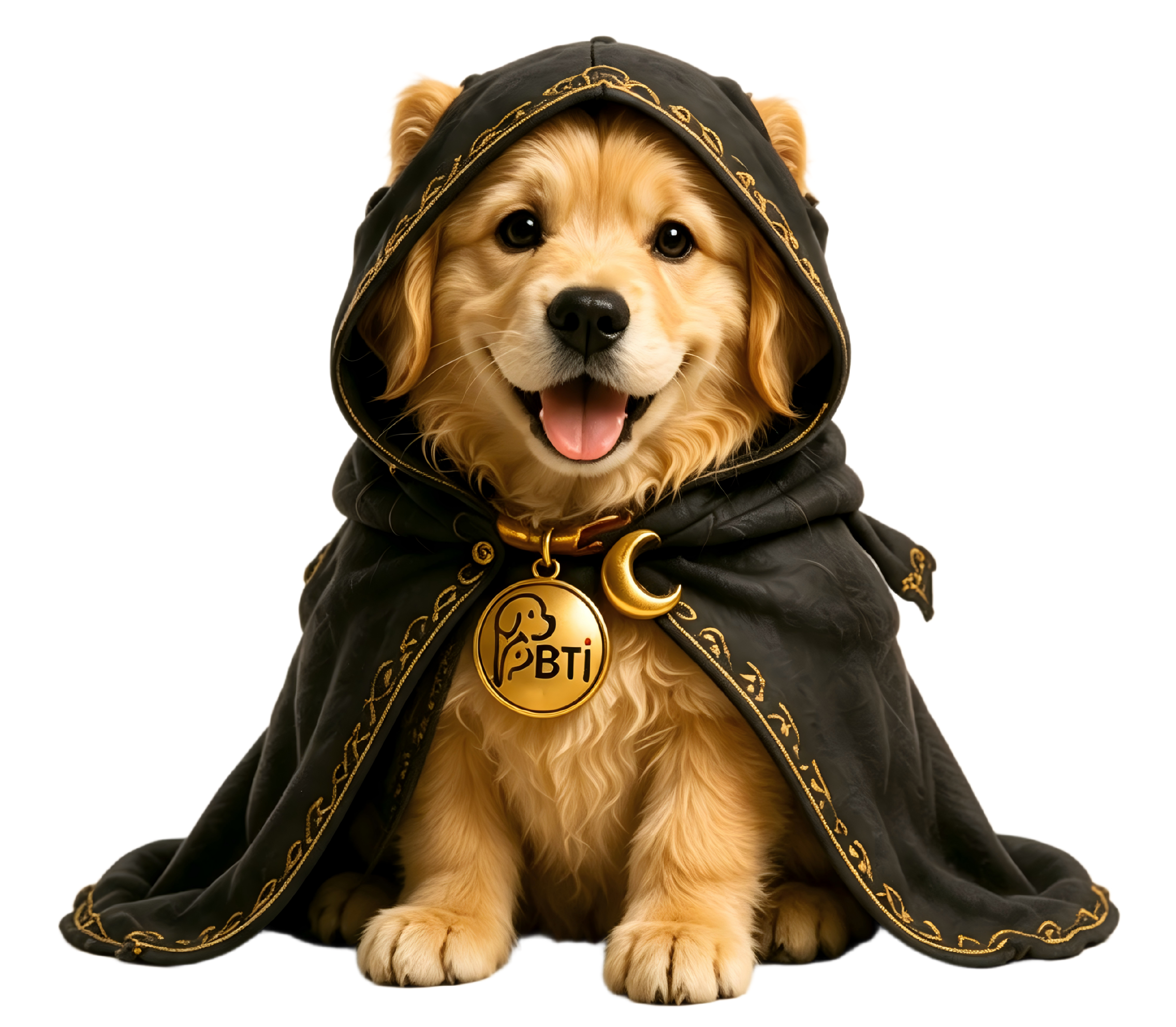
The same 12 personality names and four-letter codes are shared by cats and dogs, with species-specific artwork used automatically.








Finding overlooked signs of trust, needs, and affection in everyday behavior.
Demo stories for layout preview; they will be replaced with authorized customer feedback before final publication.
“I used to think Mochi was distant. The report helped me notice that sharing a room, slow blinking, and choosing the chair beside me were already her way of showing trust.”
“The result described Milo's need for predictable routines so accurately. Small changes to our leaving-home ritual have made both of us noticeably calmer.”
“Cookie was not being difficult—she needed shorter, more rewarding play. Once we changed the timing, the restless evenings became our favorite part of the day.”
Assessment totals and behavior data points are calculated only from completed assessments.
Your experience helps us improve the questions, report, and journey. Submitted feedback is stored only in this browser.
Clear answers about the method, suitable use, and result boundaries.
PBTI is a custom educational indicator for pets. It uses owner-observed animal behavior across four PBTI dimensions and does not apply a human MBTI questionnaire to cats or dogs.
The assessment contains 28 questions and usually takes several minutes. Answer from repeated daily behavior rather than one unusual event.
The item design is informed by owner-observed cat and dog behavior research, including concepts related to Feline Five and C-BARQ. PBTI remains a separate custom model and is not a clinical diagnosis or a validated reproduction of those instruments.
No. Photos are used only to describe visible appearance and possible breed cues. Personality comes from the behavior assessment, and visual identification cannot prove ancestry, health, or temperament.
Most owners can complete it once they have observed stable daily patterns. Very young, newly adopted, unwell, or recently relocated pets may need more observation time before the result is representative.
Create a separate profile and answer the assessment independently for each pet. Do not combine the behavior of several animals into one result.
Create a profile, upload a photo, answer the quiz, and get a personality result in minutes.
Start now